A lecture by Britain's leading
Muslim Human Rights Lawyer
Sister Muddassar Arani
Innovative Minds (c) 2004
In a lecture given at a South London Mosque on 25th December 2003 Sr.Muddassar Arani explains in a practical approach with reference to real cases, what our dwindling rights are under the sweeping anti-terrorist legislation, which is fast turning the UK in to a police state. The lecture is followed by an hour of questions and answers.
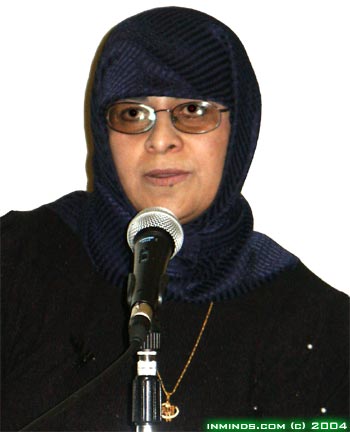
Sr.Muddassar Arani, of Arani & Co. Solicitors, is an advisor to the Islamic Human Rights Commission. She has a track record of defending Muslims, without prejudice, from wrongful police arrest and harassment.
Her success at defending the civil liberties of Muslim and thereby thwarting the states attempts in several prominent cases has made her powerful enemies and she has recently been targeted by an organised campaign to demonise her. Spurious articles in the gutter press backed by comments from shadow-ministers, members of parliament, and zionist groups have resulted in her receiving death threats.
.
Contents
 Lecture: Know Your Rights Lecture: Know Your Rights
Know Your Rights
It is vital for every one to become aware of what your rights are.
There are three acts in particular that I will be referring to in this particular speech:
1 - Terrorism Act 2000
2 - Anti-Terrorism Crime and Security Act 2001
3 - Immigration Nationality and Asylum Act 2002
Although what is being stated in this particular matter, I'm making references to the Terrorism Act, in reality quiet a lot of the same principles and basic rules apply also to the other criminal offences relating to other criminal provisions in this country.
MI5 - The Security Service
So what are your rights as far as MI5 are concerned?
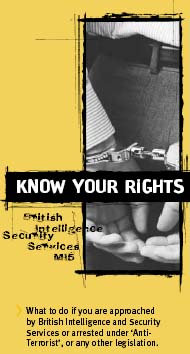
The reason I'm going to be talking about MI5 is due to the fact that there are a large percentage of the Muslim community that are being contacted by MI5 officers. A lot of people are panicking because they don't know what to do, a lot of people are uncertain what their choices are when they are approached by MI5 officers. That is in spite of the fact that there is already a leaflet called "Know Your Rights" which sets out in black and white what a persons should or should not do when they are approached by MI5 officers, but unfortunately it appears that the message is not going across to the Muslim community.
It is vital, not just for the males, but also for the females and the Muslim community as a whole to become aware of what your rights are. So I hope that everybody is going to be taking these rights in to consideration because the same rules apply not just to the men but also to the women, because there are also women who are being arrested under the terrorist act, who are being approached by MI5 officers as well.
Where MI5 officers are concerned, supposing if you are walking down the road and MI5 officers approach you what are you supposed to do?
There are two choices that you have. The first choice is that you can work for MI5 officers, the second choice is that you don't have to work for MI5 officers. There is no obligation under any law for you to work for MI5 officers as their agents, spies or call it whatever you want to. There is no obligation for people to become their agents.
There is no obligation for you to answer any questions. It is very important for people to be aware of these basic rights. There is no duty upon you under the law for you to answer any questions that are being put to you by MI5 officers.
They do not have power to arrest. What MI5 officers can do is approach you and ask you if you want to work for them. They will offer you payment and the other things that they will do is attempt to entice you if you do not have British citizenship, for you to be granted British citizenship if you provide them with sufficient information which satisfies them.
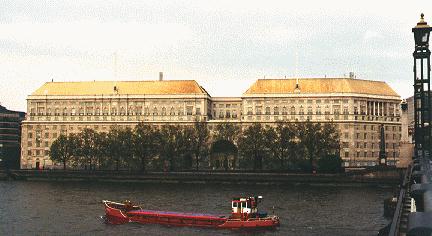
Thames House on Millbank, the London headquarters of the Security Service MI5
There is already well known documented information relating of previous people who worked for MI5. These people basically deceive other individuals whom they become very close to provide information about them to MI5 officers. They are not even allowed to inform their families or friends that they are working for MI5. In return they receive payments, in return they receive favours. MI5 agents have been known to even sleep with individuals in order to get information by way of pillow talk. So they will basically have a relationship with you, even if they don't wish to, so that they can obtain information, so that this information can be provided to MI5. MI5 is basically there to gather intelligence information about people.
You are probably wondering so who is going to be targeted? Well there's lots of people who can be targeted - trade unions, lawyers, politicians, Green Peace, animal rights organization activists, individuals who are perceived to be a threat to the state.
A file is opened on those individuals. MI5 officers are assigned to those individuals. They never give out their real names, they always use nick names - Ian. Met, Alex, etc. in order for you to contact them and for you to provide information to them if you decide to work for MI5. It is also very important for you to understand and appreciate the fact that there is no obligation for you to work.
If you are approached by MI5 officers, take their name and contact telephone number. Contact your solicitor and let your solicitors write to them if you do not wish to work for MI5 officers so at least there is a record kept there. It is very important for us as individuals to be able to do this because a lot of people who are being approached by MI5 officers are not doing so. They think they have gone away, they've accepted we don't want to work and that's the end of the story. No its not, because there is a new trend that is taking place at the moment. Those people who have been approached by MI5 officers are also being targeted at a later stage. Quite a large number of the clients that I'm representing have previously been approached by MI5 officers. We've written letters saying sorry, go away the client does not wish to become an agent or informer for MI5. They have made admissions that the client is innocent, that they do not suspect the client of involvement in order to attempt to entice the client. In spite of the letters being written, we have had to go so far as to threaten MI5 that injunction proceeding will be taken out against them if the harassment continues.
Unfortunately what is taking place now is that people are being picked up under the Terrorism Act six months, eight months down the line, so don't think that just because you have been approached by MI5 officers and they say that you are innocent, that you will not be picked up later on - six months, eight months down the line - by anti-terrorist branch. That is a very high possibility and its very important that not only you but members of your family are made aware of this so that you can act appropriately if that eventuality occurs with you.
Terrorism Act - Section 40(1)
So what are your rights under the Terrorism Act?
So supposing that someone's being raided first thing in the morning, say approximately 5:30 - 6 o'clock in the morning. Anti-terrorist officers come in to your house, they break down the doors and they arrest you. There is panic in the house. They usually come in with warrants for your arrest and for the premises to be searched. The arrest takes place under section 40(1) of the Terrorism Act for instigation, preparation or commission of the offence. This usually takes place in the early hours of the morning between 5:30-6, 6:30-7 in the morning.
Officers will request the wife, the children or other members of the family who are in the house to vacate the house. For the family members to either go and live at another places if they have any relatives or friends who they can stay with. If they do not have anybody whom they can stay with then accommodation is provided by the police at police expense for the people to reside in hotel accommodation until the conclusion of the search.
The search can take place somewhere between 5 days to even 7 days, sometimes shorter than that, sometimes longer - maximum 7 days. It is important for you to also realise that various documents and items will be seized from your house, mainly computers - emails will be searched, records, bank accounting details, electrical equipment, any documents, papers, passports, IDs will be removed. The searched that take place under the Terrorism Act are very very thorough searches. You also have the explosives police going in to check for explosives or any other items of that nature. They will go in to every single room, every single item even the loft, so every single place in your house can be searched by the anti-terrorist branch.
What happens to the men is that the men are taken in to the police station. What happens with the women and the children is that they are requested to stay elsewhere, in some cases they are allowed to stay there but its very rare for that to happen.
Applications can be made in respect of a warrant for further detention of the individual. This is usually done after 36 hours of the person being detained in custody. The maximum time that a person can be detained in custody, not only under the Terrorism Act but any other legislation is 7 days. So its very important for the people who have been detained as well as their loved ones, families and friends to appreciate that the maximum time that the police can detain any person will be 7 days. On the 7th day the police officers have to decide whether or not the person should be charged.
I'm going to go on now to talk about what happens to the men when they are detained. There are cases when women are detained, but I will refer as a male example.
What happens when you are taken by the police officer, escorted to the police station?
You normally arrive in the custody cells. Its Paddington Green police station normally because there is a secure unit there. If there is an overflow then you will be taken to Charring Cross police station. There is a very long lengthy procedure in order for your details to be taken by the custody officer who will want to ascertain from you whether you wish to have a solicitor instructed. Please, for Gods sake, request a solicitor to represent you. The solicitor does not charge you anything for their presence at the police station. I know there are certain lawyers who attempt to entice clients in to stating that if they paid the right price they can get better advice than the legal aid lawyers - that's a whole lot of nonsense. What you should do is insure that you have the name of a solicitor and that name can be provided to the custody officer. You have a right to speak to the solicitor and the solicitor will attend the police station in order to discuss matters with you.
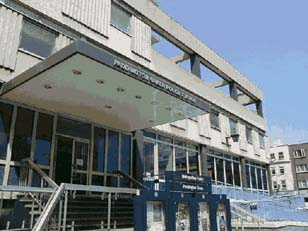
Paddington Green Police Station
It is also very important that when you make your first contact with the solicitor via the telephone that you do not discuss the intimate details of your case because everything you discuss is being recorded by the police officers and also whilst you are in the custody area there is CCTV there with voice recording taking place 24 hours, Therefore it is important for you to realise that any conversations you are going to have with a solicitor is going to be limited in that regard. Its important for you not to sign any thing until the solicitor attends or to answer any questions that the police officers put to you. There is a very long and lengthy procedure that takes place prior to the arrival of the solicitor. Namely your fingerprints will be taken; your DNA and photographs will be taken. Because this is anti-terrorism legislation that is being applied here the procedure is very lengthy where as with other criminal proceedings matter it's a very short swift procedure. So it can take up to 3 hours for one persons finger prints, DNA, and photographs to be taken.
So, your solicitor arrives at the police station and you've been through the process of having your fingerprints, DNA and photographs taken. Contacts made with the family who knows what's going on.
What happens next is if the police officers are in a position to proceed with the matter they will serve the solicitor with what is called a disclosure sheet. The disclosure sheet has very limited information. The first disclosure sheet will have approximately 4-5 or 6 lines wanting to discuss very basic general information about you – what's your name, what's your family make up, what do you do for your living, where were you born, have you got any kids, when were you married - very very basic information. Its a temptation for anyone to think this is so easy, these officers must be so stupid, that I can answer these questions. What you don't seem to realise is that these officers are really just going to test you. They have got more information about you and they haven't disclosed that information to you at this stage because what they really want you to do is to answer their questions. So please do not fall under that trap. Yes the information is very basic, yes its very easy, yes its not incriminating but there is going to be a trap. They want you to speak.
You can't have a situation arising where you decide to answer some questions and not answer the other questions. If you are going to do something you have to ensure that the same rule applies for your [whole] stay - maximum period 7 days. So if you decide to answer questions, you have to answer all the questions for the rest of the time duration you are there. However if you stop answering questions in between, say its the 3rd day and you say oh my god do I really have to answer these questions, this is too hot for me to handle, it looks very incriminating when that evidence is produced in court because what the inference will be that you are prepared to answer questions that you find easy and that are not incriminating against you, but when you find that you are going to be incriminated you are not willing to answer those questions.
Therefore the rule of thumb on a terrorist case is do not answer any questions that are put to you. You have a right to remain silent, use that right that is your right, don't be afraid of using that right. You don't even have to sit there saying no comment to the questions that the police officers are putting to you. You do not even have to say your name, you do not even have to give your date of birth, you do not even have to say what address they arrested you from - they know all of that information. What you can do is just sit there and let the officers talk, get a solicitor to do a very short statement on your behalf stating "on the legal advice received the solicitor has advised the client to exercise their right to silence due to the limited discloser that has been provided to the solicitors". That will give you the protection in the event that you are charged at a later stage by the police and are produced at court so that an adverse inference is not drawn against you. This is something that the court will take in to account -why did you not answer questions at a police station when you had the first opportunity to do so. You have a defence then, there is limited discloser that is given by the police officers that is the reason why you did not answer the questions. Use that right to protect yourself and others who may be arrested with you. It is a fundamental basic right, use it to your advantage, even if it means for 7 days you are going to sit there and not say anything. It does not hurt you, not to say anything.
I will give you an example of a case: A client didn't accept the advice I gave him. He decided to speak. He gave innocent explanations for 7 days to the police officers. He got charged. When we were in the magistrates court, the prosecutor Steve Patrick stood up in the magistrates court and made an application to the magistrate for an adjournment of the case because the innocent explanation had to be rebutted by the prosecution and they were going to be doing that by producing an Islamic expert in court. So don't think that innocent explanations that you may be able to provide would not be twisted and turned and misconstrued in different ways by the police officers, they will be. He thought he would answer the questions, he would not get charged, that will be it and after 7 days he could go home. He learnt the lesson the hard way. He ended staying in Belmarsh prison for 10 months [whilst the prosecution prepared its Islamic experts to rebut the clients answers]. Having a trial of his case, he was eventually acquitted [found innocent and freed].
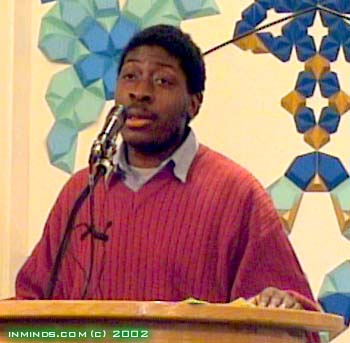
Sulayman Zain-ul-Abidin, wrongfully arrested under the Terrorism Act, he spent 10 months imprisoned in Belmarsh Prison before his trail and subsequent acquittal. The trail was a shambles, the facts at the trial clearly showed that he had been targeted simply for being a Muslim
with no evidence against him.
So you can exercise your right of silence - do it, because you do not know what the case against you is. You do not know what the allegations are being alleged against you, you do not know what trap they are setting for you, you do not know how they are going to link you with other individuals who may be arrested. So its not just the answers you are giving, but other individuals as well who may be arrested with you or prior to your arrest or after your arrest, that they will try and link you all together. So you do not know what information anybody is going to give on you, or say about you, so its very very important for you to have the full picture before you, for you to know exactly what is the case being stated against you, for you to have sight of those documents in order for you to properly answer the questions that will be put to you in the witness box when you go to court.
Terrorism Act – Section 7
Other case examples where people are being arrested under what is called Section 7 of the Terrorism Act. This Section 7 is being used very heavily at the present moment - at any airport, if a person is removed from a ship, aircraft or vehicle a person can be questioned without any form of suspicion by the police officers. It is normally SO12, which is Special Branch 12 officers who attend there. They are just below MI5 officers, just above Special Branch 13 who are the anti-terrorist officers. They collect information, but they can also arrest a person. What is happening is that there are lots of people who have been questioned and I had a lot of cases being reported after the event and quiet a few at the time as people are becoming slightly more aware of what is happening.
You have a right to have a friend or relative notified of your detention, you have a right to request that a solicitor represent you free of charge under legal aid. You do not have to answer questions related to third parties as you have only been arrested for your part under the Terrorism Act, for any part you may have played that the officers suspect you of, not third parties of. Unfortunately what is happening is that a lot of people are answering questions relating to other members of the family, relating to people they may know, and they think well if you answer these questions we are going to be let go off and that's the end of the day. What you have to understand is that they are now arrests taking place as a result of people providing answers under Section 7.
Quick Guide: Police Force
The Police Force have the authority to stop someone for questioning, arrest individuals and raid properies (with a proper warrant). Their headquarters is the New Scotland Yard building opposite St.James Park underground station.
The Police force have several special operations teams, designated by number. These are:
SO1 International and Organised Crime
SO2 Department Support Group
SO3 Scenes of Crime Branch
SO4 National Identification Bureau
SO5 Miscellaneous Forces Index
SO6 Fraud Squad
SO7 Support
SO8 Forensic Science Laboratory
SO9 Flying Squad
SO10 Crime Operations Group
SO11 Criminal Intelligence Branch
SO12 Special Branch
SO13 Anti-Terrorist Branch
SO14 Royalty Protection Branch
SO15 Royal Palaces Division
SO16 Diplomatic Protection Branch
SO17 Palace of Westminster Division
SO18 Police National Computer Bureau
SO19 Force Firearms Unit
SO20 Forensic Medical Examiners Branch
Its normally officers from SO12 (Special Branch) that detain and question people at airports under Section 7 of the Terrorism Act.
The officers who raid homes and arrest people under section 40(1) of the Terrorism Act are usually from SO13 (Anti-Terrorist Branch). The main 'Anti-Terrorist' police station where arrested individuals are brought to is at Paddington Green in London.
MI5 is the security service. They can be compared to the israeli Shin Bet but as they are not part of the police force they do not have powers to arrest or stop anyone. There job is to spy on British people, collecting information against them, looking for the enemy within.
Their numbers are soon to be expanded by 50% from 2000 to 3000. The recrutment adverts are looking for people with Muslim language skill like fluent Arabic, Persian and Urdu; suggesting that their primary operational target is the Muslim community in this country. Further, a budget of £3 million has been set aside for creating a network of intelligence cells in the communities across the country.
The headquarters of MI5 is Thames House on Millbank (Embankment).
MI6 is the secret intelligence service. They can be compared to the CIA or Mossad. Their job is to protect British interests from abroad and are responsible for overseas assassinations and terror campaigns. The MI6 headquaters are located next to Vauxhall Bridge.
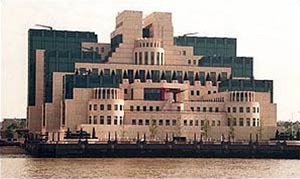
MI6 Headquaters - where Britain plans its own
terrorist campaigns abroad
|
So what can happen to you under Section 7?
Your property can be detained for a maximum period of up to 7 days. You have a duty to answer questions relating to you. If you exercise the right of silence you can be arrested and if found guilty imprisoned for 3 months and or fined - the maximum sentence period is 3 months. A person can be detained up to 9 hours beginning with the time of the examination of the person. So it is very important for you to ensure that you have a solicitor available to represent you and to properly advise you at the early stages. Unfortunately what is taking place is, and I'll illustrate this with a case example, is that people answer questions thinking well we'll answer everything under the sun.
What happened in this particular case was that my client was in Dover. He was an Algerian client. He had an Algerian passport and a Swedish passport - he was a Swedish national as well. The officer suspected this particular client due to the fact that they suspected his Swedish passport was fake and also because they found £7,500 cash when the client was travelling out. Although its not illegal for you to take cash of up to £10,000 out of the country without being questioned by customs and excise, but if you are a Muslim and you are found with cash then they do stop you because they suspect that the sums of money is going to be used for funding terrorist activities. So this person answered the questions under Section 7 and he ended up being arrested under the terrorism act after he had answered all the questions without seeking legal advice thinking yes these are simple questions I can answer them and I can just get rid of them and just make my way home.
He then got arrested and was taken to Folkestone police station. He instructed a duty solicitor to represent him. The duty solicitor advised him to answer all of the questions that the officers were putting to him and to make a full and frank admission of everything. Unfortunately he followed the duty solicitors advice, he answered the questions for the first 36 hours and he was getting himself in to more and more deeper waters as the time went on because his house had been raided, they had taken various documents from there. His wife was being questioned, there were threats being made that the wife would also be arrested under the terrorism act, they had very young children therefore the children would be taken by social services because they didn't have any immediate family in this country unless other arrangements were made to look after the children in the interim.
So you can imagine the panic state this individual was in. Somebody then advised his wife to basically change solicitors. Luckily the call was put through - it is not normal for the call to be put through. And on the 19th of June I travelled out to Dover to speak to the client. An extension had been granted for 7 days. I advised the client not to answer any questions with relation to the £7,500 which had been obtained as a loan from the bank, and they suspected the sums of money was going to be used by the client to finance some terrorist groups in Algeria. There was no shred of evidence to support the assertions and the inference that was being made by the police officers. The client accepted the advice and remained silent. He then got charged although there was not sufficient evidence to charge this particular client in my view. He was remanded in Belmarsh Prison for 2 months and subsequently released in August as there was not sufficient evidence to charge the client. He then went ahead and signed a piece of paper stating that the £7,500 sums of money that had been detained by the police officers could be returned back to the bank as he did not intend to use that money for funding any terrorist organization so he's more than happy to refund that sums of money.
So what happens to this unfortunate client? Arrangements are made for the properties to be returned. His car was full because he was going to France taking gifts for the members of the family. Unbeknown to me he had notified the police officers that he was going to be going to France straight way after retrieving the goods from the police officers. The secretary of state had made a decision which we were not aware of and that decision was that this particular client would not be allowed to come back in to the United Kingdom once he had left the United Kingdom. So the poor guy went on Euro train to France and he met with two of the police officers, they served him with the letter signed by the Secretary of State stating that he was not allowed to come back in to this country ever. If he ever returned back in to the country then he would be deported and he would not have a right to stay here. This particular client has a wife and children here. They have basically been living apart ever since the secretary of state got the police officers to serve the letter on him.
So its very important for people to realise that even if you are released and there isn't any evidence against you, the secretary of state if you are not a British citizen can make an application and exercise his discretion stating that you should be excluded from the county because your presence is not conducive to the public interest. And that's it, there is no right to an appeal to this. There is no remedy to this.
Citizenship
The other thing is that we have to appreciate the fact that those individuals who are living in this country should where ever its possible obtain status in this country and as soon as possible apply for British citizenship. Because what is happening is that you get clients that are living in this country and they have been granted indefinite leave, they do not give up their other nationality and they've travelled abroad thinking there was no information on them that would link them to any terrorist activity. And one of the cases that comes in to my mind is Moroccan case where the client went abroad to seek his wife. Harmless you would think. It didn't end up being harmless for him, he ended up being arrested under the Terrorism Act. There was no evidence to charge him even under the Moroccan provisions because they couldn't find anything to link him with any terrorist activity. But unfortunately he was not provided with any assistance from the British Government, and I have letters in my possession in black and white stating that they do not owe any duty to the client because he is not a British national although he was been granted indefinite leave to remain in this country. So its very important for people who wish to travel out even if you are not involved in any criminal activity ensure that you attempt to obtain British citizenship and that you travel out on your British passport, that way the British government would have a responsibility towards you.
Immigration and Nationality Act 2002 - Section 40
This brings me to the Immigration and Nationality Act 2002, in particular to Section 40 where the secretary of state can deprive a person of their citizenship status if the secretary of state is satisfied that the person has done anything seriously prejudicial to the vital interests of the UK. There is only one man that this particular provision has been used against and that person is Sheikh Abu Hamza. He is a test case that is going through the courts at the moment.
Yes a person does have a right to appeal, bus suppose there is a case scenario you have two nationalities. Say for example you have a British nationality and for arguments sake a Pakistani nationality because you want to get inheritance there or you don't want to pay your visa trip to Pakistan or for whatever reasons you might have for keeping your Pakistani nationality. So what happened to that particular individual? Your British nationality can be taken away from you by the secretary of state exercising this power against you. So he doesn't have sufficient evidence to arrest you under the terrorist act, so what does this secretary of state do? He brings in a provision under the immigration act to really arrest you for a criminal offence but under the guise of immigration because they know that everybody talks about immigration and people don't want immigrates living in this country - they think there are already too many immigrants in this country, so the law is passed.
Anti-Terrorism Act 2001
So what can happen? Your British nationality can be taken away and you will only have your Pakistani nationality. You are therefore recognised as a foreigner in this country because you are not British [any more]. And once you are recognised as a foreigner then the Anti-Terrorism Act 2001 can apply to you as the law stands at the present moment. Part 4 of that law states that foreigners can be arrested and detained indefinitely, and the word that is very important here is INDEFINATELY, without trial, without evidence against you. You can have a review of your case take place 6 months later by the immigration tribuneral, not even a criminal court, where you will not have access to all the information against you.
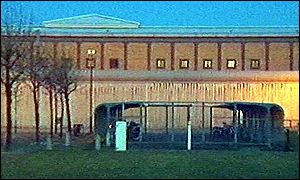
Britains Guantanamo - Belmarsh
Prison in South London
holds Muslims detained indefinately, without charge,
without trial
under Part 4 of the Anti-Terrorism Act 2001
So what happens is that you have a part viewing where your lawyers can be present, you can be present, and the other part of the hearing that takes place is in private where what is called a special advocate will go in and represent your client. He is appointed by the government - you cannot defend your client, you cannot rebut the evidence or the allegations that are being made because you are not privy to those allegations and the evidence. So MI5 officers can go in and give evidence against an individual and you will not even know what that evidence is. So those men do not have a right to a fair trial. Because it's not going to be a fair trial if they cannot even rebut the evidence that is being provided against them.
The Privy Council was charged with the review of the Anti-Terrorism Act 2001. And I'm pleased to state that even the Privy Council are of the view that part 4 of that act should be appealed. There is a letter which has been prepared and I would request people to sign and send to their MPs in order to ensure those Muslims that are being detained at the present moment in Belmarsh prison under part 4 of the terrorism act obtain our support so that we can attempt to lobby the government so that those individuals can be released and be free men. If they are going to be charged then they should be charged like every other citizen in this country and there should not be any difference whether you are British or non-British person. The same rule of law should be applied to everyone.
There is a recent case which I did, I think it was last year, what happened was a client of mine, a very rich man who was not involved in terrorism, an Iraqi client. He was going to sign some contracts in Jordan - he works for some oil company. He was stopped by special branch at Heathrow airport, he only had £4000 cash on him. He was on his way out, they asked him some basic questions and they allowed him to go. What happened was that the British intelligence passed on the information to Jordan. The Jordan authorities picked him up as soon as his flight landed in Jordan, he was detained for six weeks, he was tortured and not even allowed to see any day light for six weeks. His father was suffering from cancer and was going through an operation - he could not even make a call to his ill father.
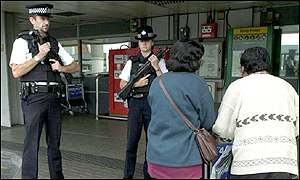
Armed police at Heathrow Airport
We attempted to obtain lawyers in Jordan to ensure that a Habeas Corpus application could be undertaken for this particular client so that we could discover his whereabouts and that I could make arrangements for Red Cross to go in to see my client to ensure the torture he was being subjected to could be reduced. Unfortunately none of the lawyers in Jordan were prepared to take on the case. The client went on hunger strike and the Jordan authorities thought that he may not survive and put him on the next flight back to England.
He made a call to his friend who contacted me immediately and I made arrangements to go down to Heathrow airport in order to receive the client, for ambulance and medical assistance to be provided for the client, and a wheel chair. Soon as he was taken off the flight he was put in to a wheel chair and special branch SO12 wanted to interview the client under section 7. There were lots of delaying tactics that were being employed in order to ensure he didn't have a solicitor present. Thank God he got the message on his mobile - text message saying to instruct me and that a lawyer was waiting outside for him. We went inside he answered some of the basic questions. It was so sad that the police officers were laughing at his injuries. They stated to me that my client had more flesh on him then prior to his departure; they mocked the fact that he had severe pain and he was reduced in tears. It was really unfortunate that my client couldn't hear these comments that were being made behind his back. I notified the client of what was being said.
Anyway to cut the long story short after the section 7 questions had concluded MI5 officers approached us and states that they know wanted my client to provide them voluntary information to MI5. I did not even consult with my client whose English was limited. I stated to the officers that my client would not be co-operating with MI5 officers. They had removed his computer equipment, printing equipment for his work purposes so he went down to Scotland Yard on Wednesday gone last week and as I advised him, he was petrified of going on his own, I told him to go on his own because I knew there would be special branch officers waiting to see him in order to attempt to entice him to work for them. Exactly as I had advised the client 3 officers were present on the pretext of returning his computer, the officers attempted to entice him to work for them. And as I advised the client that if the officers did so then he should state that he didn't wish to say anything to them and that he was going to ring his solicitor and that anything the officers were going to be saying should be said in the presence of his solicitor.
It is very important to realise that information is being passed to other countries, and other countries are unfortunately are carrying out the torture on behalf of the British government and the American government. This isn't the only case where people are being picked up, there have been other cases, a very unfortunate case where someone was picked up in Zambia and have now been taken by the Americans to Cuba where they are indefinitely held until release can be obtained.
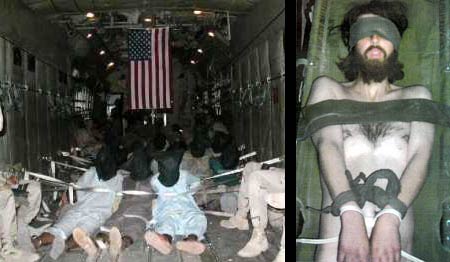
Muslims from around the world kidnapped by the US and sent to Guantanamo
Its very important to realise that if you are stopped and suspected that you notify somebody and if you are not a British passport holder for Gods sake don't travel out to any of the Arab countries or any of the Muslim countries because you can be picked up on an international warrant either at the request of the US or United Kingdom and taken, tortured, interrogated, if you are lucky you will be released, and if you are not lucky you can be taken to Cuba and kept there.
South London Case
I think the last case I will talk about is the recent case that was in the public domain of the four people I represented from the Tooting area. I think some people may have heard about one of the clients being assaulted. In that particular case the raid took place at about 5:14am. The officers went in to the bedroom and the client did NOT attempt to resist arrest taking place, unfortunately physical and verbal abuse was directed against the client. He was handcuffed and assaulted in the presence of his wife. His wife was eventually allowed to go in to the other room in order for her to cover up and change. Subsequently what happened was the person was taken down the stairs kicked and hit by the police officers and the verbal abuse was directed against this particular individual. Then he was taken in to the front room of the house and what is very racist comments were made by the police officers where by the police officers put the individual in a praying position and stated "where is your God, you are in prayer now". This shows the kind of islamophobia that is taking place, that this particular terrorist war is not taking place against individuals but is in reality taking place against Islam.
Unfortunately he was further assaulted, touched, stripped and eventually taken in the van to the police station. Again he was subjected to further abuse - physical, verbal, and attempts were made to strangle this individual. He then arrived at the police station where the agony was partly over. He was seen by the doctors in police custody and a private doctor was arranged for the first time in my life a private doctor has been arranged to examine a client and he was examined at length by the doctor. He had blood in his urine and unfortunately they still would not take him to the hospital for him to be examined.
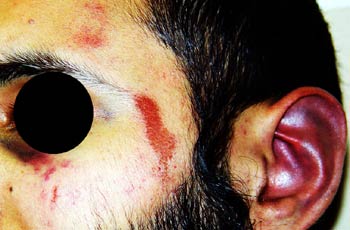
"We questioned the police officers as to the injuries the client had sustained, there were ten police officers who were present in the magistrates court and the detective inspector whom we were speaking to stated that the injures were not as a result of any arrest taking place, and that they were old injuries!"
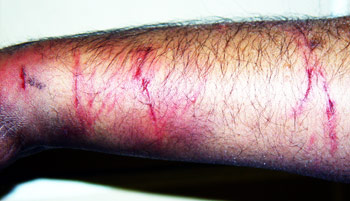
But what I found very sad was that when we were at the police station an application was being made for further detention of this particular individual and the others there and we questioned the police officers as to the injuries the client had sustained, there were ten police officers who were present in the magistrates court and the detective inspector whom we were speaking to stated that the injures were not as a result of any arrest taking place, and that they were old injuries! This annoyed me to such an extent that I notified council that I would be more than happy to go in to the witness box in order to give evidence against the police officers because the injuries I had seen on these particular individuals were fresh injuries, the cuts were fresh and they were not old injuries. Representations were made to the district judge and the police officers backtracked without me even having to go in to the witness box to give evidence because the officers were fully aware if they were going to call a solicitor a liar then they would have to think twice.
...in the Media
Arrested Muslim says he was terrorised by police
Muslim News, 19 Dec 2003
By Ahmed J Versi
One of the Muslims arrested in the recent wave of police raids across Britain says that he and his family were terrorised by police, who also insulted his religion.
In a written testimony obtained by The Muslim News, the 29-year old British Muslim of Pakistani descent gives a harrowing tale of being allegedly tortured after some 15 armed police officers dressed in riot gear broke down his front door in south London at 5 am on December 2. “The account below was my reward for being ‘British' and obeying the law of the land for my entire life,” he said.
Immediately after his house was raided, he claimed he was continually beaten by six or seven officers in his bedroom. “Within the space of a few seconds, they must have hit me about 30 times on my head and 20 times on the rest of the body.” It was only after the initial assault, he said that he was asked to confirm his name and then told he was under arrest under the Terrorism Act 2000, accused of the Commission, Preparation or Instigation of an Act or Acts of Terror. He subsequently learnt that not only him but also his wife, who is a teacher, was handcuffed even though her name was not on the warrant.
In an exclusive interview with The Muslim News, his wife said she witnessed the beating of her husband by, what they were later told, the Territorial Support Group. She said that they heard the door being forced open and heard, what “I thought they were hooligans as they were using four letter words as they were coming into the room”. She continued: “They came into the room and went for him. He was standing with his back to the window, his arms in the air. They began beating him up. I was very scared. I thought he was going to die. As I was taken to the next room, I saw my husband lying face down on the floor, still being beaten. I was shaking. I couldn't believe this was happening in Britain. They then handcuffed me. They had no warrant for my arrest. I was feeling cold. I felt they had invaded my privacy. I felt so helpless. I couldn't do anything to help my husband.”
It was when he was eventually taken downstairs that he was mocked for being a Muslim, when he was made to kneel in a prostate position. “They then all began to laugh at me whilst I was in that position and say, ‘Where is your God now? Pray to Him! You're in prayer now!' They were sneering and laughing.” His beatings continued while he was made to lie down when he was being taken in a van to Charing Cross police station.
“The same two officers who were torturing me inside the van, accompanied me outside the van. They continued to swear at me and twist my cuffs until we entered the Police Station, whence they both became angels and duly obeyed the instructions of the Duty Police Officer.” When his handcuffs were finally taken off, he said that both of his wrists were swollen and bleeding profusely and part of his palms were numb.
Doctors report included injuries:
“severe bruising to the whole body,
especially the head, wrist,
face, knees and legs,
black eye and cuts on the face,
possibly perforated ear-drum with visible blood inside the canal,
bruising to kidneys which gave
traces of blood in my urine
for three days after the assault,
possibly fractured cheek bone,
possibly fractured ribs.”
His doctor's recommendation that he be taken to hospital ASAP was denied.
His lawyers took both video and still footage of his injuries on the day of his arrest. He was also seen twice a day by police doctors but was not examined by an independent doctor until after 48 hours. His detailed report included such injuries as “severe bruising to the whole body, especially the head, wrist, face, knees and legs, black eye and cuts on the face, possibly perforated ear-drum with visible blood inside the canal, bruising to kidneys which gave traces of blood in my urine for three days after the assault, possibly fractured cheek bone, possibly fractured ribs.” His doctor's recommendation that he be taken to hospital as soon as possible and be x-rayed was denied. During his seven-day detention, he said he was kept in solitary confinement questioned about items the Anti-Terrorist Police had taken from his house, including receipts, old family holiday videos, cash that he had saved and other bits and pieces from the house.
In an interview with The Muslim News he said he was interrogated on three other issues: terrorism – if he was a member of a terrorist group, whether he was involved in terrorism; jihad – if he was involved in jihad; freedom fighters – whether he supported any freedom fighters or member of any freedom fighter group. He was also asked if he worked for any charity or if he knew of any training camps supported by any charity. Another issue he was asked was if he was a member of any Muslim political organisation. He said he was also asked whether he knew Sajid Badat, who has been charged under Terrorism Act. To all these questions, he replied in the negative.
He said his fingerprints, mouth swab DNA and hair samples were taken and sent all around the world, including to the US, to see if he had any links to terrorism, but that nothing was found. His house and office was also searched for explosives, chemical weapons and other terrorism-related items but again without any success.
He said that when he was eventually released without charge he was still not told what ‘act or acts of terror' he was supposed to have ‘commissioned prepared for or instigated.'
Of his ordeal, he said that he felt “angry, bitter, terrorised, betrayed and oppressed.” Government officials who continuously declare that this is a war against terror and not a war against Islam, are “liars and hypocrites, because if it was not a War Against Islam, then why did the Police insult my religion, my prayer.”
He said that he did not understand how “those who terrorise innocent people themselves have the right to claim that they are fighting a War on Terror.” He said he believed that everyone should know about this incident, so that it is “not repeated and no other innocent people are terrorised by Britain's ‘Anti-Terrorist' Police.”
His brother was also arrested at the same time. His brother's wife was six weeks pregnant and he said she was so traumatised at the arrest of her husband, during which she and her two young children (one is 18 months old) were kept in a van that she later bled profusely and lost her baby few days later.
The Muslim News is keeping his, his wife's and his brother's names anonymous to protect their identity, but can reveal that that he was not only born in the UK but graduated with a Masters Degree at a top British university. His father has also worked as a British Government Civil Servant for 30 years. Before his arrest, he said that had had no dealings with the police, had not seen a police cell or even had any points on his driving licence. Since his release, he has been off-work, suffering from both his physical injuries and the psychological damage caused.
Spokesperson of the Metropolitan Police Special Forces told The Muslim News, “A formal complaint has been received and it is being considered.”
Mosques launch protests over 'terror' arrests
The Guardian, 13 Dec 2003
Hugh Muir
Hundreds of mosques have launched a protest campaign against the treatment of British Muslims arrested as part of the "war on terror".
Amid rising anger in Muslim communities in London and other major cities, those who attended Friday prayers at mosques throughout London were urged to bombard the home secretary, David Blunkett, with letters of complaint about what they consider their loss of human rights.
Officials from the Muslim Council of Britain expressed their concern to Mr Blunkett during a meeting on Tuesday and a gathering of 500 community representatives called for action from the government to regulate the behaviour of anti-terrorist officers.
Allegations surrounding one particular raid on December 2 appear to have brought matters to a head. In that case officers are alleged to have been responsible for a series of unprovoked attacks and to have subjected a suspect to Islamophobic abuse.
Massoud Shadjareh, the chairman of the Islamic Human Rights Commission, said: "The police force is behaving more like a vigilante force. Organisations have come together to say enough is enough."
Aafreen Khan, a spokeswoman for the Muslim Public Affairs Committee, added: "Out of 500 arrests since September 11, only 77 have been charged and two convicted. That leaves 400-odd British Muslims who, through no fault of their own, have had their lives ruined with loss of jobs and local harassment. We are wondering whose son and husband will be next."
Many Muslims cite the case of suspect A, who was one of four men arrested during a series of early morning raids, as highly symbolic.
Yesterday he told the Guardian how his ordeal began as he and his wife were awakened by a loud bang.
As six or seven officers burst into the room, the 29-year-old said he merely held his arms aloft. "They were punching me in the head, on the back and on the legs. I must have taken about 30 strikes."
He said he had been pulled to the floor and only then did the officers seek to confirm his name. "They told me I was being arrested under the Terrorism Act. I was completely shocked."
He claims that as his wife was handcuffed the beating continued. One officer had grabbed his genitals and others swung his arms behind his back to handcuff him.
"They put me in the prostrate position we adopt when we pray, They started laughing and asking, 'Where is your God now?'... I realised this was not an ordinary arrest." The suspect had never been arrested and said he initially thought the approach was normal. But then, it is claimed, the officers began mocking his beliefs. In a room set aside for prayer they allegedly broke candlestick holders. "They put me in the prostrate position we adopt when we pray," he said. "They started laughing and asking, 'Where is your God now?'... I realised this was not an ordinary arrest."
He says the laughing continued as the officers pulled down his leggings to search him. He was then pulled outside to the van where he claims the mistreatment continued. "They laid me face down. One officer stood on my ankle and I took five or 10 punches to the back and kidneys. They were pulling and twisting the cuffs.
"Then, a few minutes into the journey, one guy put me into a headlock and squeezed until I was gasping for breath. He said, 'You will remember this day for the rest of your life you fucking bastard'."
He claims the abuse continued until he was in the police station. Three days later, when a doctor was sent to examine him in the presence of a police doctor, he was found to have injuries to his face, scalp, neck, chest, back, upper arm, elbow, forearm, abdomen, thigh and both feet. Tests found blood in his urine.
He and three other men arrested during the operation were released without charge after seven days.
His solicitor, Muddassar Arani, said he had received no apology and personal effects taken during the raid had not been returned. "This sort of behaviour is alienating Muslim communities," she said.
"We hear a lot about these arrests but very little when these men are released, and nothing about the effect this has on their families."
A Scotland Yard spokesman confirmed it had received a complaint but said no officer had been suspended. The case is expected to be referred to the Police Complaints Authority.
Home Office figures for 2002-03 published yesterday revealed that there had been 32,100 searches under the Terrorism Act, 21,900 more than in the previous year and more than 30,000 above 1999-2000 levels. Of the 32,100 searches, just 380 people were arrested.
|
So it's very important to realise that these kinds of things are unfortunately happening and that they shouldn't be allowed to happen to anybody else. Its very important for people to become aware of what is going on in the community. Its also very important for people to understand that don't basically bury your head in the sand thinking its not going to happen to us. It can happen to you. If you are a Muslim, it can happen to you because you can be picked up.
Prepare Your Families
Its very important to make your families aware of what can or can't happen, what the rules are, what the regulations are, and how you should basically react if something like that were to happen to you. There are unfortunately a lot of problems that are taking place with the sisters whose husbands are being detained, not with these particular cases but with other cases. The women don't know how to do shopping, the women don't know what the basic rights are, the women don't know how to survive, the women don't know how to communicate and there is no internal support network for the women. And it's important that not only the men, but also that there is some structure for support for the women to be provided and for the children.
I'll give a very very short example. It was a Algerian case that I did about two months ago which was again a high profile one where the clients wife had arrived from Algeria, she couldn't speak English and I can't communicate in Arabic unfortunately. There wasn't any family or relatives here, and she was very heavily pregnant. What happened was that she had a two-year-old daughter, they were put in a hotel, unfortunately she didn't speak the language, she didn't know how to order food. The client was panic stricken, worried about his wife not being able to communicate, not being able to feed herself, not having money to look after herself or provide food. I had to make arrangements in order for somebody else who could communicate in Arabic to communicate with the clients wife and make arrangements for her to be picked up, find a sister who would be able to look after her and the child in the interim because she was not allowed to stay in the house and unfortunately all of these arrangements took such a long time from 6:30 in the morning to 8pm at night this particular sister and her child did not have any food to eat. So its very important for us to also insure that all our women become a bit more independent and can survive if something like this were to happen. They have got to know what their basic rights are. If the man is being detained for the woman to claim income support, housing benefit, so that then their houses aren't being repossessed.
There's lots of people in that particular case I'm explaining about the Algerian lady, because she doesn't have stay in this country - she was dependent upon her husband, she can't claim income support, she can't get child benefit, so she is left at the mercy of the community, for the community to provide for her, for the community not only to give her shelter because she's been made homeless because the rent can't be paid as her husbands in Belmarsh Prison but also for food to be provided for the child, for the new born baby and for them to be looked after whilst he is on remand, at least whilst he is in custody somebody can support and look after her. We've made arrangements for somebody to look after the sister and we are making arrangements for money to be paid to her so that she doesn't become too much of a burden on the brother and sister who are looking after this particular lady and the children.
So its very important for us to have something where we can make these arrangements without running around like headless chicken because trying to find somebody to be able to cope with this situation and its very important for sisters to be able to manoeuvre and to become more independent and to be able to do things without being dependent of the husbands so if something like this were to happen they can learn to cope because it makes life easy.
Statistics reveal Persecution
Home Office figures for 2002-03 revealed that there have been 32,100 searches under the Terrorism Act, 21,900 more than in the previous year and more than 30,000 above 1999-2000 levels.
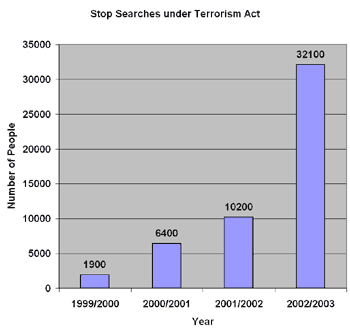
Of the 32,100 searches, just 380 people were arrested, and the home office has admitted that
"the majority of which were not in connection with terrorism" (they were mainly immigration offences). That's about 1%, the remaining 99% of stop-searches were for no reason other than to harass, intimidate and terrorise the Muslim* community.
Further, one civil liberties group, Statewatch, has shown that the figure of 32,100 for searches under the Terrorism Act is wrong, the actual figure is more than double that at 71,100!
Apparently
most of the police forces (25 out of the 46) around the country are
recording anti-terrorist stop and searches under section 60 of the Criminal Justice and Public Order Act 1994 (used for football hooligans) instead of section 44.1 and 44.2 of the Terrorism Act 2000 thus disguising the real extent of stop and searches under anti-terrorist provisions. This revised figures suggests that only 1 out of every 187 people stopped and searched, in the street or in their cars under the Terrorism Act, leads to an arrest. The
remaining
99.5% are victims of
religious
profiling by the police - stopped and searched simply for being Muslims.
An example of one of the 99.5% wrongful stops, which was
presented to the Committee of Privy Counsellors charged with reviewing the Anti-Terrorism legislation (19 June 2003), was of a Muslim father driving his 10yrs old son to the toy shop. The car was surrounded by armed Police officers and guns were placed not only on the fathers's head but on the 10 year old child's head as well. Abusive and racist language was directed against them and furthermore, the Police officers made threats to the father as follows: "We will blow your son's head off!" Subsequently it was realised that there was an error made by the Police and the father and son were allowed to drive off.
The total number of people arrested under the Terrorism Act since 11 September 2001 (to 31 January 2004) is 544, out of these a mere 98 - that's just 18% - were charged. The remaining 82% were wrongly arrested and kept in custody under constant interrogation for up to 7 days for no reason.
The most common offence allegedly committed by the 98 arrested was "Possessing an article in circumstances which give rise to a reasonable suspicion that his possession is for a purpose connected with the commission, preparation or instigation of an act of terrorism" (59 people charged with this). In one instance this "article which gave a reasonable suspicion" of terrorism was none other that the Holy Quran, found with a post-it note on a page which also mentioned the word "jihad" (more).
Other popular offences included "Possessing a document or record containing information of a kind likely to be useful to a person committing or preparing an act of terrorism" (12 people charged with this.) The reader should be careful to erase this web page from their browser cache as by showing the location photo of the headquarters of both MI5 and MI6 - surely prime terrorist targets - possession of this page may be construed as an offence under the Terrorism Act!
Luckily judges and juries, although under immense pressure to convict, are making a last stand against such unjust prosecutions. Just
yesterday
(1 March 2004) a crown court
judge threw out the case against six activists for human rights in Turkey who were charged under the Terrorism Act. He said "Were this prosecution to continue, it would bring the administration of justice into disrepute amongst right-thinking people and offend this court's sense of propriety and justice." Out of the 98 arrests, only 6 were found guilty and lead to convictions - 2 of which were Sikhs, convicted for being members of the banned
Sikh Youth Federation.
17 people so far have been detained under the notorious part 4 of the
Anti-Terrorism, Crime & Security Act 2001 which breaks every code of Human Rights including the
European
Commission
on Human Rights. Under part 4,
foreign nationals
are locked up
indefinitely, like at Guantanamo, with out charge and with out trial. Some have now been detained for over two years without even being given a reason as to what they are suspected of. (Read their recent letter to the Guardian). This shameful situation is indicative of state abuse of draconian laws in the pursuit of an oppressive policy to intimidate and terrorise its Muslim minority - the Gestapo would have been proud!
* These figures do not include Northern Ireland and so on the whole reflect actions taken
overwhelmingly
against the Muslim community.
Source for figures: home office website: www.homeoffice.gov.uk
Copyright © Innovative Minds 2004. www.inminds.co.uk |
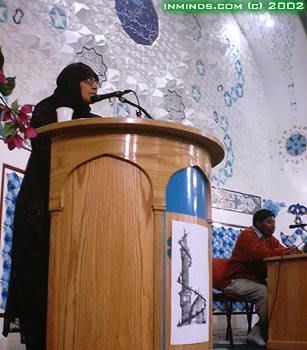
Sr.Muddassar Arani with wrongly imprisoned client
Sulayman Zain-ul-Abidin addressing an IHRC conference
on the abuses of human rights following 9-11.
Questions & Answers: Know Your Rights
Q1. Can your British citizenship be revoked even if you were born in Britain and haven't lived in the country whose citizenship you also hold?
Answer is yes, even if you were born in the UK and suppose you had for example a Pakistani passport, your British citizenship can be taken away even if you have never travelled to Pakistan, even if you don't know the way of life there, the language, the customs.
Download (shift-click) QA (real audio 39sec 82Kb) |
Q2. When an MI5 officer approaches you when do you keep quiet and when do you answer just the basic questions?
If it's an MI5 officer who's approached you, it makes no difference where the MI5 officer is approaching you - whether it's at the airport, outside your school or on the street, where ever.
If the MI5 officer approaches you, the sole reason for him approaching you is due to the fact that he wants you to supply information to him about someone or for you to work for him. What the MI5 officers tend to do at the outset is to make arrangements to meet you somewhere discrete where they can discuss matters with you.
Best thing for you to do at that stage is, if you do not wish to work for them that is, state to the officer can I please have your name and your number, I wish to reflect on matters and I will get back to you or my lawyers will get back to you. The best thing to do is get your lawyer to come between you and the MI5 officers.
What tends to happen is that MI5 officers, even when lawyers ring on your behalf and leave their detail, don't return the calls to the solicitor and what they are really trying to do is they are trying to gauge you in answering their questions. And the sole motive in them gauging your attention is because they want to attempt to get you to work for them. MI5 officers are desperate for people in particular in the Muslim community to provide information to them.
Download (shift-click) QA (real audio 2mins 260Kb)
|
Q3. What kind of items can be seen as incriminating?
That's a difficult one to answer, what happened was that on certain occasions they had taken a copy of Osama Bin Ladens video tape to infer that he supports al-Qaeda because he has Osama Bin Ladens video tape at home.
The worst scenario was when in this particular case they didn't have any evidence against my client - they stated my client was innocent, even then they arrested him because he refused to be questioned under caution by the police officers. What happened with that particular client was that they didn't have anything on him so they took a copy of the Quran, they opened the copy of the Quran and they said, "well there is a post-it note near the word Jihad - you fund Jihad don't you? Thats what you do, you support terrorism don't you?”

The Quran - now considered by the police as
incriminating evidence of terrorism
So anything can be misconstrued - if they are taking a copy of the Quran from your house and misconstruing that - they are attempting to make the Quran look incriminating - so the answer is anything can be incriminating!
Download (shift-click) QA (real audio 1:19mins 166Kb)
|
Q4. A person has 5 years to remain in this country before he can become a British national, is it advisable for him to travel on Hajj at this time?
I need to know more about his background information. I think it would be better if he has concerns to come and speak to me privately. I would advise him not to if he has ever been approached by MI5 or Special Branch, I would advise him to exercise caution.
Download (shift-click) QA (real audio 46sec 98Kb)
|
Q5. Should we get rid of posters that have duas on it for mujahedin etc.?
If you have got anything with duas for mujahedin, books on jihad, videos, if it is a limited part of your library collection then they shouldn't be a problem.
But if the main information they are going to elicit from your home related to jihad, to fighting taking place in various parts on the world, to conflict situations then the inference that will be implied is that you are supportive of these conflicts and that is the reason why you have this information in your possession.
If you have limited information in your possession for instance you have other things in your house which aren't related to jihad and are related to other Islamic issues -marriage, divorce, mixing of men women - whatever have you and you can show that there is other book collections in your house then the inference will be slightly less implied.
Download (shift-click) QA (real audio 1:32mins 192Kb)
|
Q6. You are travelling from a London airport and you are asked a number of questions such as do you know al-Qaeda, are you funding for jihad, are you travelling to an Arab country, etc what should your reply be?
Well if you are being questioned under section 7 of the terrorist act at the port you have to answer the question, unfortunately you cannot exercise your right of silence because what can happen is that they can infer from your silence that you are wilfully refusing to answer questions. That's a very technical point - how to they know what you have embedded in your brain unless they have got information about you.
The best thing to do, I don't advise my clients to answer questions about al-Qaeda and what's happening in Iraq, what I tend to do is when I'm present with the client is say restrict the questions to what the officer believes my client has done which the officer suspects may be of a terrorist activity. So therefore if the officer is asking general questions - e.g. what's your view of what's taking place in Iraq - that's neither here nor there. If I was present with the client in the police station I would then state "sorry no, that question is irrelevant because it does not go to the preparation, instigation or commission of the offence by my client. My clients' political views or religious views are not relevant to this. So it really depends on, if the individual is able to assert themselves properly or not or would they want the lawyer to assert themselves. Basic questions i.e. where are you travelling, when are you going to come back, what are the reasons for your visit - they can ask those types of questions. Those types of questions you would have to answer, but suppose they started asking you questions about members of your family.
A case that comes to my mind is actually a lady. She was stopped at Heathrow airport and there were some names that were mentioned in the press regarding her father so as soon as she landed at Heathrow airport police officers pulled her in and they started asking her questions about her father, whether he was involved in any terrorist activity, what did he think about this particular article in the newspaper that had been printed even though the father had never been arrested or detained for any terrorist activity. She answered all of the questions not knowing she shouldn't have answered those questions, there was no need for the officers to ask those particular questions to her. What happened to that particular client was because she didn't know her basic rights she answered everything for the 9 hours she was detained in police custody for.
So the answer is yes you have to answer questions but know you don't have to answer everything because they would have to prove, in order for you to be charged under section 7 that you have wilfully refused to answer questions put to you by the officers, and how do they know what is in your mind, and what information you do or don't hold in your mind? So it's a very technical thing and it's new because nobody has yet been charged under these provisions although they have been arrested and questioned. I hope I have answered your question.
Download (shift-click) QA (real audio 3:41mins 456Kb)
|
Q7. What are the visiting conditions for those who have not been charged but are on remand, ie can a non-family member visit those in prison who have not been charged?
The answer is yes and no. Yes to a certain extent non-family members can go and visit those who are held on remand in Belmarsh Prison but the other person would have to provide your name to the officers for you to have a visitation right and you would have to under go security checks, ID checks in order for you to visit other people there.
Download (shift-click) QA (real audio 41sec 88Kb)
Letter from the "Forgotten Detainees"
of Belmarsh Prison
(sent to the Guardian Newspaper, 26 Feb 2004)
"We were arrested in December 2001 and taken straight to Belmarsh prison. We know that the police in this country have enormous powers to investigate suspected terrorists. Why did no one ever speak to us? Why were we never asked a single question before being locked up as terrorists? We have never had a trial. We were found guilty without one. We are imprisoned indefinitely and probably forever. We have no idea why. We have not been told what the evidence is against us. We are here. Speak to us. Listen to us..."
|
|
Q8. You are asked (by the police) whether you knew the brothers (who have been arrested) what should you say?
I think the best thing for you to do is request a solicitor to be present because I would not advise you to answer any questions relating to any third parties because what they are really trying to do is without basically you having the right to exercise you right to silence is to obtain information from you.
If they are asking you questions related to third parties. My advise is say "Sorry, I'm not willing to answer anything, I have a right to have a solicitor present, and I would like my solicitor present in order for me to be provided with proper advice". Even if it means in the short term that you end up suffering, its better that you suffer than other people being pulled in and God knows how many other people suffering as a result of you talking and answering questions. So a solicitor can prepare muted replies on your behalf if need be.
So answer to your question is - solicitor, don't answer the question, if you have to - do a limited reply once the solicitor is present so you don't get charged for wilfully refusing to comply.
Download (shift-click) QA (real audio 1:31mins 190Kb)
|
Q9. Is it possible to request a Muslim solicitor, can we have Muslim solicitors phone number to contact just in case?
If you are in a police station and you don't know the name of a solicitor, the solicitor that will be provided for you will be a duty solicitor. If members of your family wish to make arrangements for a solicitor to represent you then that arrangement can be put forward, however you have to be cautious and very very careful that once a solicitor is appointed even if its a duty solicitor calls are not normally allowed through for the person to appoint another person as a solicitor so if you do want a solicitor make sure you carry their details with you because its going to make life easier for you if you have the name and telephone number of the person - take a card with you - put it in your mobile - do anything - give it to members of your family so if you have problems they know who to contact immediately so that you can have proper representation.
Download (shift-click) QA (real audio 1:10mins 147Kb)
|
Q10. I have 5 years visa, can I still apply for indefinite to remain? Now I am holding French nationality.
Yes you should be able to apply for British citizenship, I think its best if you go and speak to an immigration specialist I'm not an immigration specialist lawyer but my understanding of the law as it stands is that you can still apply for your British citizenship, and I would advise the person to do so.
Download (shift-click) QA (real audio 31sec 66Kb)
|
Q11. Please clarify the individuals rights to silence when questioned by officers. Is this until you have access to a solicitor?
No. You have a right to remain silent from the time that the officers arrest you - they enter your house basically. Its also very important at this stage for the sisters to realize that normally when their husbands or brothers or whoever's been detained and is arrested, the officers attempt to gauge information from the other people in the house. So they attempt to ask you questions, they do not have a right to ask you questions because its not the other people in the house who are under arrest and my advise to those individuals in the house is not to answer any questions as you are not under any duty to do so. The right of silence for who ever has been arrested commences from the time they (officers) have come inside your house and broken down your door.
Download (shift-click) QA (real audio 1:05mins 137Kb)
|
Q12. You mentioned that your nationality could be taken away. Can that happen to someone who is of white English origin, not part of any foreign origin, would the person be able to remain in the country, what rights would he have, would he become a refugee once his nationality has been taken away?
Supposing if you were a white person born and bred in this country - you've got British passport and all your ancestors is English. If you go and take another passport and another country's nationality then the immigration nationality asylum act 2002 section 42 can apply where you are concerned and the secretary of state can make an application to deprive you of your citizenship.
I believe one of the reasons they have introduced that rule is supposing under those circumstances they wanted to arrest you (after taking your citizenship), they could arrest you under the 2001 terrorism act part 4 where you could then be detained indefinitely in Belmarsh Prison. Those people who are being detained and are foreign nationals in Belmarsh Prison, they have the option if they wish to exercise the option to leave the country and go back to their home countries, but if you were born and bred here then its unlikely that you would take the option of leaving the country - you would be kept in custody indefinitely.
Download (shift-click) QA (real audio 1:45mins 217Kb)
|
Q13. There is a newspaper called ----- which my father was part of. He was contacted by Scotland Yard about an article written in early 1990 which my father didn't give to them - that is the article. He hasn't been contacted since then. What do you think the next step might be?
I don't know what the article contains and what particular information is in that article, I would have to read the article in order to be able to give you proper advise, unless and until I actually read the article and am provided with more information about what Scotland Yard wanted to discuss with him, whose been mentioned in the article, I can't really answer this question.
It was on jihad and the police wanted to know the person who wrote it and where that person is now.
The answer is I don't think the information should be provided to Scotland Yard and if your father is picked up then its best that he exercises his right to silence as I have stated the maximum he is going to suffer is 7 days in custody, its unlikely he can be charged for that. If he exercises his right to silence other people would not be arrested and its important for us to realise that although one individual may suffer as a result of remaining silent there can be other individuals who can hopefully be saved from the same anguish.
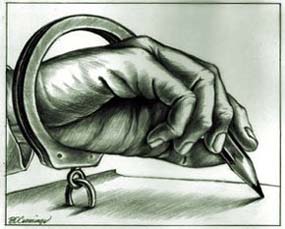
Police chasing author of an article written 14 years ago!
It's important for us to have this principle in mind because people should not be just looking at their own self-interest. I know the hardships are there but you have got to look at the wider implications that it may have for other people who may be arrested.
Download (shift-click) QA (real audio 2:10mins 270Kb)
|
Q14. How can you help the situation in a police interview?
The only way I can think of protecting a client is basically for a short statement to be prepared signed by the client and served on the police officers. I usually tend to do that at a later stage during the interviews not at the early states of the interviews. If for example a specific allegation has been made in a particular case, what can happen is that you can rebut that allegation.
For instance in one of the cases the officers were alleging that the item that had been removed from my clients home were explosives, and it was a very innocent device that was taken from the client which was a car amplifier so what I did was I basically did a very shot statement saying that "I -the clients name- can confirm the fact that I'm not involved in any acts of terrorism and this item that was shown in the interview alleged to be an explosive item is nothing more than a car amplifier, and I cant understand why I'm being detained here". So in that particular case, because that was the most crucial evidence against the client I did at the early stages put his innocent explanations forward without the client actually speaking. So the client could continue to exercise his right of silence but protect the client at the same time and do a short statement.
So each case will differ, and its a matter of judgement for the lawyer basically takes at the time, what should or should not be done, is it the right time for a short statement to be prepared and filed on the record, so that's the way to do it. I personally think that's the best way to protect the client because no adverse inference can be drawn against the client if the client is charged because he can always say look here's my statement, its already been produced and given to you which says this item is not an explosive item and I'm not involved in acts of terrorism, but the client hasn't answered everything else. So whatever I deem appropriate, a solicitor deems appropriate can be covered in that way and its best to cover it in that way because the person then doesn't need to answer any other questions.
Download (shift-click) QA (real audio 2:47mins 270Kb)
|
Q15. Under normal circumstances does the police or other law officer tell you that you have the right to remain silent?
Its not the police officers duty to state to the client that they can exercise their right to silence, that is something the lawyer would advise the client.
But when the interview commences a caution is read out and the first part of the caution is "You have a right to remain silent, however if you do not do so and mention something which you later rely on in court an adverse inference can be drawn against you". So when the caution is read out the first part of the caution is "You have a right to remain silent" so its on the record, officers have to state that at the outset when the interview commences and obviously the interview that takes place with the client - if the officers don't administer the caution the interview can in its totality be thrown out if successful by the defence, but normally the officers do mention the caution at every single interview.
And there is also another thing that is also mentioned in the interview, which is called a special warning. A special warning can be given related to say a particular item that was found at your house, for example the explosive item. And again don't panic when a special warning is given. Best thing to do is right if silence, a little short one two line statement prepared on your behalf and filed and served on the police officers. That will protect you to the best of the lawyers' ability.
Download (shift-click) QA (real audio 2:27mins 303Kb)
|
Q16. If your house is going to be searched, can you refuse to leave?
Yes you can refuse to leave to a certain extent, however in certain cases if they think that there is explosives there they can take you out of the house. So yes you can refuse to leave, if you wish to stay there, but if the officers are carrying out forensic examinations or they think there is going to be explosives there or other items they can request you to leave the premises and you don't have much of a choice there.
Download (shift-click) QA (real audio 41sec 88Kb)
|
Q17. If MI5 come to your house and ask to search your house, and then plant something and later they say they found it in your house, how can you deal with this?
MI5 officers do not come to your house, MI5 officers do not have the power to arrest you and to detain you. MI5 officers are basically only there to gather information about you.
So if you are talking about anti-terrorist branch officers coming in to your house, yes they can come in to your house, but if you wish you can have one person present through out the search taking place. The only difficulties you will find is that the member of the family may start discussing matters with them and without realising, giving out more information then they should be giving out. It's happened on cases where people end up discussing things at length.
I haven't really come across a case where officers have planted anything on any person.
Download (shift-click) QA (real audio 1:10mins 147Kb)
|
Q18. How do we tell who is approaching you and under what act - MI5 information gathering, anti-terrorist branch, etc. so we can read the right section of the leaflet*? *Know Your Rights Leaflet (see)
You will know when you are approached by MI5 officers because they will show you their card. Any person that approaches you, the first thing you must do is say "Can I see your card?". So they show you their badge and they will say "I am from MI5" or they will say "We are from the anti-terrorist branch" or "special branch" which is another name for them. And ordinary officers will come in uniform or detectives can come in to your house (plains cloths officers). But you have a right to see their badge, so that is how you will know if you are being stopped by MI5 officers or anti-terrorist officers.
When MI5 officers stop you, they will be attempting to elicit information from you and basically to entice you to work them, to become their agents.
When anti-terrorist branch officers come to you although they also are approaching clients in order to attempt engage them to work for them, you will know them because usually what happens is that after you have been released, special branch officers on the pretext of returning property turn up to your house and say "come on we know you are a nice lad, we know you didn't do anything wrong, go on be a good lad, help us - work for us". So you know those officers because they were your interviewing officers.
In relation to other charges obviously it will be plain cloths detectives who will come to you, again you have a right to see their charge so you will know which section of the leaflet you are looking at, and who the officers are.
Download (shift-click) QA (real audio 2:14mins 278Kb)
|
Q19. What advice would you give to elderly members of the family if their house is raided?
It's the same advice to any member of the family. If you want to stay anywhere else, stay somewhere else.
The best thing for all members of the family who are not detained is to appreciate is that you are not likely to see your loved ones for 7 days usually, and its better if you are mentally prepared for the person being detained for 7 days. Although an application can be made for a warrant for further detention after 36 hours (of arrest) and granted for another 36 hours, 48 hours, what ever the time may be requested by the police, no judge will allow somebody who has been arrested under the terrorism act or somebody who has been arrested under a very serious offence - murder, attempted murder, rape, GBH, ABH... to be released from custody, so its very important for people to be mentally prepared for their loved ones to be away for 7 days.
Clothing to be provided for them so at least they can have a change of clothing, freshen up and attempt to live a normal as possible under the circumstances whilst they are in custody.
Download (shift-click) QA (real audio 1:38mins 203Kb)
|
Q20. What do you advise those people who are going to Arab countries for Islamic studies and Arabic studies?
If you are just going generally and you are travelling out on your British passport and people know your movements then the British government would be under an obligation if in the event you were detained for them to secure your release and for arrangements to be made for a British consulate to see you to ensure that you are not tortured or interrogated too harshly. But if you do breach the law of that country or if information has been provided there is a possibility that you could be facing charges abroad, but its a very difficult question to answer because i need to know a bit about a persons way of life, thinking... But normally anybody who is going abroad is basically regarded a bit of a suspect.
Download (shift-click) QA (real audio 1:10mins 148Kb)
|
Q21. Can someone be arrested for possessing articles that the non-Muslims see as against their way of thinking, i.e. articles on jihad, bombing, etc., on going to a persons lecture who they see as a terrorist?
Well if the police regarded an individual as a terrorist that person would not be giving a lecture in the first place - they would probably have been charged and detained unless there isn't evidence against a person and you are attending the lecture..It depends on the type of lecture that is being provided and which individual you are talking about so that's a very general question.
You can't be arrested for possessing items merely just because the thinking may be different from somebody else's, but if you've got items for instance relating to how to make a bomb, and where to go to get various items and to put them together yes of course you can be arrested for those kinds of offences - its a very general question I hope I've answered it.
Download (shift-click) QA (real audio 1:08mins 143Kb)
|
Q22. Thank you for the session but we need something more substantial - something people can read through and become aware.
Well the first leaflet "Know Your Rights", a half a million copies have been distributed free of charge to the Muslim community, unfortunately if the Muslim community aren't making themselves aware its very very difficult for any other literature to be produced to make the Muslim community aware. The first leaflet was produced as a result of myself and the Islamic Human Rights Commission being inundated with calls from the community who didn't know what their basic rights were. So what that really does is set out your basic rights.
The second leaflet which is "Know Your Rights Part 2" sets out something which I regard as being very substantially important which is Section 7 which has been used so substantially by the police, its really an abuse that is taking place there. And the reason why I thought it was important to highlight the Immigration Nationality and Asylum Act 2002, section 40 was due to the fact that people didn't know what could happen if somebody had dual nationality and people are not aware what can happen for instance if you are travelling out on a non-British passport and how the British government would wash your their hands of you and say sorry go to the other country because you are the other countries nationality, you travelled out on their passport, go to them for assistance - why are you coming to us?
Its difficult to produce, well its not difficult - I'm sure there is literature available in the shops regarding terrorism act which is very lengthy, but its more targeted at the lawyers so that the lawyers are in a position to advise the clients what should or shouldn't happen.
I think if you follow the basic rules as individuals hopefully you can't go wrong. And the basic rules are - exercise your right of silence, have a lawyer present to represent you, even if its MI5 and you have to pay a little money, its worth paying that little money to get them to do a letter for you. As with all other criminal proceedings you have a right to have a solicitor to represent you in a police station - use that right. If you have a name of a solicitor - good and well, if not then you can ask for a duty solicitor to represent you. So they would be able to guide you what can or can't happen. I hope I've answered your questions, I know its not the answer you wanted, its basic information which has to be instilled in peoples minds. You follow the basics you can't go wrong.
Download (shift-click) QA (real audio 3:40mins 452Kb)
|
Q23. Is there any way of raising funds for jihad without...
<< laughter >> I don't think I can answer that question. I can't advise anybody to make any collections for jihad purposes without you being in breach of the terrorist act. If I did that, and if any body here does that you can be arrested under the terrorism act and detained in custody and charged <<further laughs>> and probably imprisoned for doing so.
Download (shift-click) QA (real audio 38sec 82Kb)
|
Q24. If you are charged and the acquitted, can you sue the government for compensation?
It depends on what circumstances you are talking about. If you are being charged under the terrorism act and you get acquitted its unlikely that you will be able to sue the police for the time that you spent in custody. Unfortunately the police have protection because they have a warrant. There was reasonable suspicion that you hade committed some form of offence, so even if you get acquitted unfortunately you cannot sue the police because you will not be able to succeed in that department.
Download (shift-click) QA (real audio 47sec 99Kb)
|
Q25. Can one be arrested for supporting a particular person, action of name your child after a name that coincides with a name of someone they term as terrorist?
If you name your child Osama Bin Laden it doesn't matter, you will not be arrested for doing so. But i think your child will probably be picked on heavily in school if he goes to the state school.
You can be arrested for supporting any proscribed group, which is listed in the terrorist act, and most of the groups that have been proscribed are Muslim groups. So yes you can be arrested for supporting any proscribed group but not for naming your child after any group of individual who is the leader of any terrorist group.
Download (shift-click) QA (real audio 1mins 127Kb)
|
Q26. Shouldn't we be supporting our brothers whilst they are being investigated rather than simply saying (to the police) I no nothing or I know very little about him?
It depends on what you mean by supporting or assisting. You see the thing is this, when you are in police custody they suspect or have reasonable suspicion that you have been involved in some act of terrorism. So if you are saying that whilst you are in police custody should you say something about somebody else - say nice things about them. They are not there to ask you nice things, they are there to ask you intimate information about them and you do not know what that person is or is not saying so it depends on where you are coming from.
I don't know what scenario you are thinking of or you have in your mind. I don't know if you want to enlighten me further in order for me to answer your question.
Download (shift-click) QA (real audio 59sec 125Kb)
|
Q27. We cannot collect funds for jihad but can we collect funds for humanitarian relief, for example widows, orphans and refugees?
Of course you can. You can collect money for orphans, children, widows or anything of that nature, but what you have to understand is what is taking place with the charity commission is that they tend to target a lot of the Muslim charities. And quiet a lot of the charities unfortunately are being heavily investigated as a result of information that is being provided. So what happens is that all the money is suppose to be for innocent people who may be suffering in third world countries but the charities are under very heavy investigation by the charity commission which is another way of really them abusing their powers and stopping collection, stopping aid going to those who are in desperate need.
Download (shift-click) QA (real audio 1:06mins 139Kb)
|
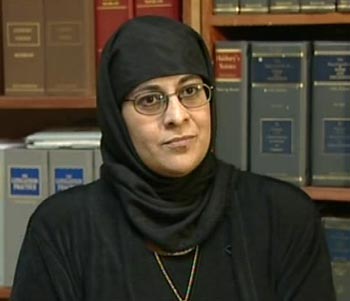
Sr Muddassar Arani under attack for defending Muslims
Muslim Lawyer Under Attack
Apparently it is not enough that Muslims are targeted by the police via religious profiling in "stop and search" operations with over 70,000 being stopped last year; that draconian laws are rushed through parliament specifically with Muslims in mind as its targets; now they don't want Muslims to even be permitted a legal defence when falsely arrested. That is what the attack on Sr.Muddassar Arani is about.
She has taken on case after case, with out prejudice, of Muslims being denied their human rights - cases which other solicitors, including Muslims solicitors, have shyed away from - and to the embarrassment of the establishment, she has won every single case - dozens of Muslims freed from wrongful arrest. It reached a stage where
the Police wary of her, have on occasion refused clients to have access to the solicitor of their choice
because it happened to be Sr Arani and instead insisted they select one of the duty solicitors which they didn't want, and when the clients family contacted Sr.Arani to represent him the police lied and said the client didn't want Sr.Arani to represent him! (A Bradford case submitted to the Committee of Privy Counsellors charged with reviewing the Anti-Terrorism legislation, 19 June 2003).
She has become a thorn in the side of those wishing to sweep away our rights. This is why she has been targeted by a vicious, but organised, campaign to demonise her - to terrorise her in to stopping her human rights work. And failing that, there are already indications that they wish to attack her integrity as a lawyer, try and blacken her name. This apparently is the price to be paid for daring to defend Muslims - for making a stand for our rights.
Her critics, apparently a few even in the Muslim community, have questioned her decision to defend Abu Hamza - the cleric with the controversial views. These same critics have never once raised even an eyebrow when lawyers defend pedophiles, rapists and murders. There they seem to accept that pedophiles, rapists and murders like the rest of us have the right to due process and that the lawyers defending them are only doing their job. So why is it a problem when its a Muslim lawyer defending a Muslim client? Its called islamophobia.
What's more, the case of Abu Hamza has wider implications for the community in that its a test case - if the government succeeds in unjustly revoking his citizenship and deporting him then the door is open for the same to happen to the other 300-400 people the government currently has on its every expanding hit list or undesirable Muslims. Either everyone's rights are defended or otherwise we ALL loose our rights.
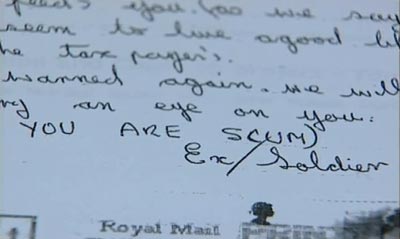
Threatening letters and phone calls - this one reads:
"You will not be warned again.
We will be keeping an eye on you.
YOU ARE SCUM.
signed: Ex/Soldier"
The first volley in the attack against Sr.Arani was fired by the Sun newspaper which devoted three pages including its front page in its attack on her, stirring its readership against her by claiming she is using their tax money to defend terrorists. Whilst the Sun is Britain's most popular paper, its readership is also known to be of the lowest IQ in the land - those that wallow in porn, gossip and xenophobia - so gullible that they will actually believe what they read. Consequently she has received death threats,
hate mail and abusive telephone calls,
and even her parents home has been hounded by a mob of Sun "reporters".
See the BBC News (24 Feb 2004) video coverage: "London solicitor has been offered police protection after an article in a national newspaper.."
BBC News Report - 24 Feb 2004 (real video 3:21mins 2Mb)
To date the Sun has refused to print an apology or give right of reply by printing the press release issued by Arani & Co. Solicitors listing the errors in the article.
Arani & Co. Solicitors
Press Release
11 th February 2004
Demonisation of Miss Muddassar Arani, Sun Newspaper article, DATED 9 th February 2004
Arani & Co. is deeply concerned at the above article. The Sun has failed miserably in the responsibility to research thoroughly and report fairly instead using the newspaper as a vitriolic vehicle for the venom of the prejudiced.
The Sun's reporting seems to be agenda led and suggest that they wish to silence and intimidate Miss Arani and Arani & Co. solicitors from taking on further cases. Further their targeting of Miss Arani alone suggests that The Sun's position is a deeply Islamophobic and xenophobic one.
Miss Arani is one of several solicitors from various firms that have taken on terrorist case work. Miss Arani and Arani & Co. however work in various fields and the majority of their legal services income comes from work other than terrorist cases including divorce cases, domestic violence, child care proceedings *******.
The article is strewn with factual inaccuracies and Islamophobic and racist vilification of Miss Arani. A few are referred to below, but more detailed responses can be provided upon request.
The Sun are implying in their article that Arani & Co has been paid £200,000 for representing Abu Hamza. This is wholly untrue and the writers of the said article ought, had they properly conducted their research, to have been aware that the firm has not received so much as one penny as regards the case concerning action taken to deprive him of his nationality. Further neither Miss Arani nor Arani & Co. are at present representing Abu Hamza and this was made known to The Sun prior to the publication of the article.
It is clear that the work of this firm has been taken out of context, as have comments and publications by Miss Arani which are no different to other human rights lawyers in this country and indeed academics e.g. Noam Chomsky. As no other human rights lawyers have been taken to task over their similar comments, it seems clear that The Sun is furthering a venomous agenda against Muslims.
As regards the references to Miss Arani's home, The Sun have stated that this property is Miss Arani's. Either they are deliberately misleading the public or have failed to do any research into the matter. The property is owned by and is the home of Miss Arani's parents and was purchased prior to the founding of Arani & Co.
The Sun has attempted to liken Miss Arani to Abu Hamza based on her past representation of him. This is a bizarre analogy to make and is not one made against the representatives of mass murderers like Harold Shipman or the lawyers of proven terrorists.
The British legal system, of which Miss Arani is an uncontroversial and long-standing member, was once renowned for due process. It is tragic that The Sun wishes to undermine this and calls on the British public to deny people their basic rights and turn the British legal system into the mirror of regimes world-wide we once berated. |
The issue has been taken to the Press Complaints Commission. The model letter that people are using to complain to the Commission is reproduced below. We encourage you to make us of it and add your voice to those who are appalled by this attack.
Your name
Your address
Date
Press Complaints Commission
1 Salisbury Square
London EC4Y 8JB
Dear Sirs,
Complaint Regarding The Sun's Demonisation of Muslim Professionals
I am writing to you in reference to articles published in The Sun on 9 February 2004, where The Sun sought to demonise Muslim professional, Ms Muddassar Arani. The two offending articles breached Parts 1-4 and 13 of the Press Code of Practice, as detailed below.
Breach of Parts 1 and 2 – Accuracy and Opportunity to Reply
The articles gave the impression that Ms Muddassar Arani received £200,000 in legal aid last year for representing Abu Hamza. This is inaccurate as Ms Arani has not received any legal aid for representing Abu Hamza. Furthermore, Ms Arani wrote a letter to The Sun and issued a Press Release on 11 February 2004 stating the inaccuracies in these articles, but to date, The Sun has not published any of these, denying Ms Arani the opportunity to reply.
Breach of Parts 3 and 4– Privacy and Harassment
The Sun published details of the area and type of house that Ms Arani lives in and the car that she drives. This is in breach of Part 3 of the Press Code of Practice. The Sun's photographers have stalked both the home and office of Ms Arani, taking photographs of her against her will, and published them. This is harassment and in breach of Part 4 of the Press Code of Practice.
Breach of Part 13 – Discrimination
The articles referred to the headscarf that Ms Arani was wearing when witnessed by The Sun's journalists. References to Ms Arani's religious clothing were made to project her as a lawyer who shares the views of her client, Abu Hamza. Ms Arani's headscarf has no relevance to the ‘story' in question and was published in a prejudical manner, thereby breaching Part 13 of the Press Code of Practice.
In conclusion, The Sun has sought to demonise a Muslim professional, who subsequently has received death threats, hate mail and abusive telephone calls as a result of these articles. Far from publishing Ms Arani's concerns or her press release, The Sun published readers letters two days letter calling for her to be struck off and deported from the UK. The Sun has acted in a manner that inflames racial and religious hatred through these articles, since other non-Muslim lawyers who represent terror suspects, paedophiles, child-killers and rapists are not portrayed in the same manner.
I hope that the Press Complaints Commission can order The Sun to publish Ms Arani's Press Release and correct the breaches of the Code of Practice that they have made, so that an end can be put to the harassment that she and her family is receiving as a result of The Sun's inflammatory articles.
I look forward to hearing from you soon. Thank you.
Yours faithfully
Your sign
Your name.
|
Ignoring the inaccuracies of the original article, the Sun attack was quickly followed by an attack by the Shadow Home
Secretary David Davis in which he repeated the same misinformation.
Not to be left behind, Andrew Dismore, MP for Hendon, joined in the morbid attack. He is already infamous for instigating the police prosecution of Sulayman Zain-ul-Abidin, the first Muslim prosecuted under the Anti-Terrorist legislation, even though there was no evidence against him, and when the trial collapsed he castigated the jury for finding Sulayman Zain-ul-Abidin innocent of all charges! As a member of the shadowy Labour Friends of Israel, Andrew Dismore is already reputed to be Israel's voice in the British parliament.
Only time will reveal how the plot against Sr.Muddassar Arani unfolds. The Muslim community must be vigilant and be prepared to counter any attack against her. We simply cannot afford to sacrifice such a rarity in the community - at a time when the community is under sustained attack she is one of its few heroes who has courageously defended our corner. Those in leadership positions in our community, in particular, must take the initiative to make vocal stances of support, to demand action from the Press Complaints Commission, and be seen to be doing so. Muslim leaders who fail to discharge their responsibility during this attack on the community will reveal themselves to be cowards unfit to lead at best, but more likely exposed as collaborators working to undermine our community.
Further Information
Leaflets produced by the Islamic Human Rights Commission and Arani & Co. Solicitors outlining your rights under the various anti-terrorism legislations (in PDF format).
Useful Internal Links
|
Islamophobia Awards 2003
Sr. Muddassar Arani gave the key note address at the Annual Islamophobia Awards last year. You can listen to the short address she gave at the awards.
|
|
9/11: The Hidden Victims
A conference on the on-going persecution of Muslims in the wake of 9/11 with specific focus on the UK. Speakers included Sr.Muddassar Arani and her client Sulayman Zain-ul-Abidin. Listen to their speeches. |
Useful External Links
|
The Islamic Human Rights Commission has a long history of being on the front line campaigning against the erosion of our civil liberties and for our human rights as Muslims to be respected.
They are perhaps unique in that unlike many other Muslim organizations, they have always remained non-sectarian, refusing to do the states biding of dividing Muslims in to good Muslims and bad Muslims, moderates and fundamentalist, Shia and Sunni, and instead have defended all Muslims (and in fact non-Muslims) without prejudice.
Check out their web-site and subscribe to their mailing list to be kept abreast of what is happening. |
|
Arani & Co. Solicitors, the official website of Sr.Muddassar Arani's law firm. Apart from contact deatils and information about the company there is a wealth of information here including case-studies of over a dozen anti-terrorism related cases.
|
|
Imagine your front door is smashed at 5 in the morning, you are beaten to a pulp by the police officers and dragged to the police station and locked up for 7 days. Upon your release, traumatised and terrorised, what is your course of action?
With the threat of further encounters with the police left in the air, most people would run for cover - hide away - never to get involved in anything that would remotely confront the police force. But Islam teaches us different, it teaches us to stand for justice - by remaining silent other people after us will be terrorised with impunity because of our silence.
Following this Islamic principle a group of police terror victims, and their families and friends, have created a web site "Stop Police Terror" to report on incidents of police terrorism and provide useful information to the public. We commend their efforts and endorse their work.
Stop Police Terror
on BBC Radio 4 Today Programme (6 March 2004)
|
Comments & Reporting Police Terror
If you wish to ask any questions or make comments with regards to this article or report on police terror incidents that you, your family or friends have suffered please feel free to enter your message below, then press SEND. We will forward incident reports to the Islamic Human Rights Commission for collation and action should you request it. It is through the reporting of these incidents, even if you remain anonymous, that we can begin to understand the extent of the problem.
All fields are OPTIONAL, but if you want a reply then please include a valid e-mail address - thank you. For police terror incidents if you wish someone from the Islamic Human Rights Commission to contact you then please include contact details. Your identity will be protected at all times.
|